
Prof Defang Ouyang, University of Macau: Artificial intelligence for drug delivery: Yesterday, today and tomorrow
The global pharmaceutical drug delivery market growth is forecasted to expand to USD 2,546.0 billion by 2029. The expanding pharmaceutical market urgently needs a more efficient drug research and development paradigm. Artificial intelligence (AI) is revolutionizing drug delivery by offering alternatives to traditional trial-and-error experimental approaches. This talk systematically traces the technological evolution from early simple models to current advanced AI algorithms in various applications, ranging from formulation optimization to the prediction of critical formulation parameters and de novo material design. To enhance the reliability of AI applications in drug delivery, we present comprehensive guidelines and “Rule of Five” (Ro5) principles to systematically direct researchers in utilizing AI in formulation development. This “Ro5” includes the following criteria: a formulation dataset containing at least 500 entries, coverage of a minimum of 10 drugs and all significant excipients, appropriate molecular representations for both drugs and excipients, inclusion of all critical process parameters, and utilization of suitable algorithms and model interpretability. The talk concludes with insights into emerging trends and future directions, including utilization of large language models, multidisciplinary collaboration opportunities, talent development and culture transformation, aimed at facilitating a paradigm shift toward AI-driven drug formulation development.
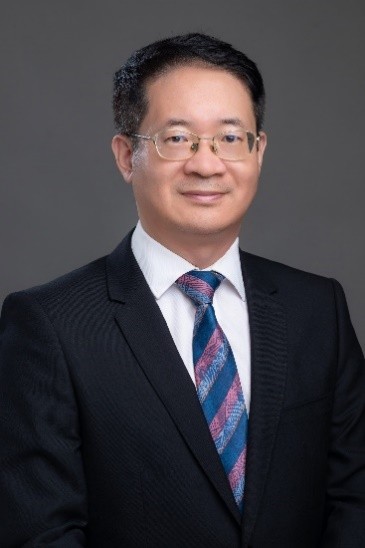
Prof. Ouyang has a multidisciplinary background in pharmaceutics & computer modelling, with experience in academia and industry. He obtained his bachelor (2000) and master (2005) in pharmaceutics from Shenyang Pharmaceutical University, China. He completed his PhD in pharmacy at The University of Queensland, Australia, in 2010 and progressed directly to his faculty position (Lecturer in Pharmaceutics, PI) at Aston University (UK). From the end of 2014, he moved to the University of Macau.
Since 2011, he has pioneered the integration of multi-scale modeling, artificial intelligence and big data techniques in the field of drug delivery – “computational pharmaceutics“. He has published 2 books, 5 book chapters and over 150 refereed SCI journal papers, along with more than 150 invited talks. He held over 10 approved patents, which had been used in medicinal products. He edited the first book in this research domain Exploring Computational Pharmaceutics – AI and Modeling in Pharma 4.0 (Wiley, 1st Edition in 2015 & 2nd edition in 2024). He has developed the crucial “Rule of 5” for effective AI drug delivery models and successfully built the first global artificial intelligence (AI)-based formulation platform “FormulationAI”.
He serves as the associate editor of Drug Delivery and Translational Research, the editorial board or scientific advisor of Asian Journal of Pharmaceutical Sciences, Pharmaceutical Research, and Journal of Pharmaceutical Sciences. He successfully trained 6 PhD and over 30 master students. He has been recognized as “World’s Top 2% Scientists” from 2020 to 2024.
His research focused on computational pharmaceutics, including:
- Artificial intelligence (AI) in drug delivery: to develop advanced machine learning algorithms for drug delivery systems;
- Multi-scale modeling in drug formulations: to integrate quantum mechanics (QM), molecular dynamics (MD) and physiologically based pharmacokinetic (PBPK) modeling into pharmaceutical formulations;
- Pharmacoinformatics: big data analysis of pharmaceutical information from the literature, patent, clinical trial and marketed products.
About Research-to-Impact Talks
SPPS Research-to-Impact talks are presentations of high-quality scholarly work with broad appeal and research impact.
The wider School community is invited to attend, including academic and professional staff, special guests, visitors, as well as HDR, postgraduate, and undergraduate students.